Stepping out of a warm shower into a chilly bathroom can quickly turn relaxation into discomfort. Many homeowners face the decision of how best to heat their bathroom while keeping towels cosy and the space inviting. Heated towel rails and traditional radiators each offer distinct benefits, but choosing between them depends on your priorities for comfort, efficiency, and style. This guide compares the two options to help you decide which suits your home.
Bathroom radiators have long been a staple in British homes, providing reliable warmth across the entire room. Yet modern alternatives like heated towel rails have gained popularity for their dual purpose of heating and drying towels. Understanding the key differences will ensure you make an informed choice that balances performance with practicality.
Both systems aim to create a welcoming environment, but they approach the task differently. While one focuses primarily on ambient temperature, the other combines functionality with space efficiency. This matters particularly in compact en-suites or family bathrooms where every centimetre counts.
Bathroom radiators often deliver powerful, consistent heat output, making them ideal for larger spaces that need rapid warming on cold mornings. Their design has evolved too, with sleek models that complement contemporary interiors.
What Is a Heated Towel Rail?
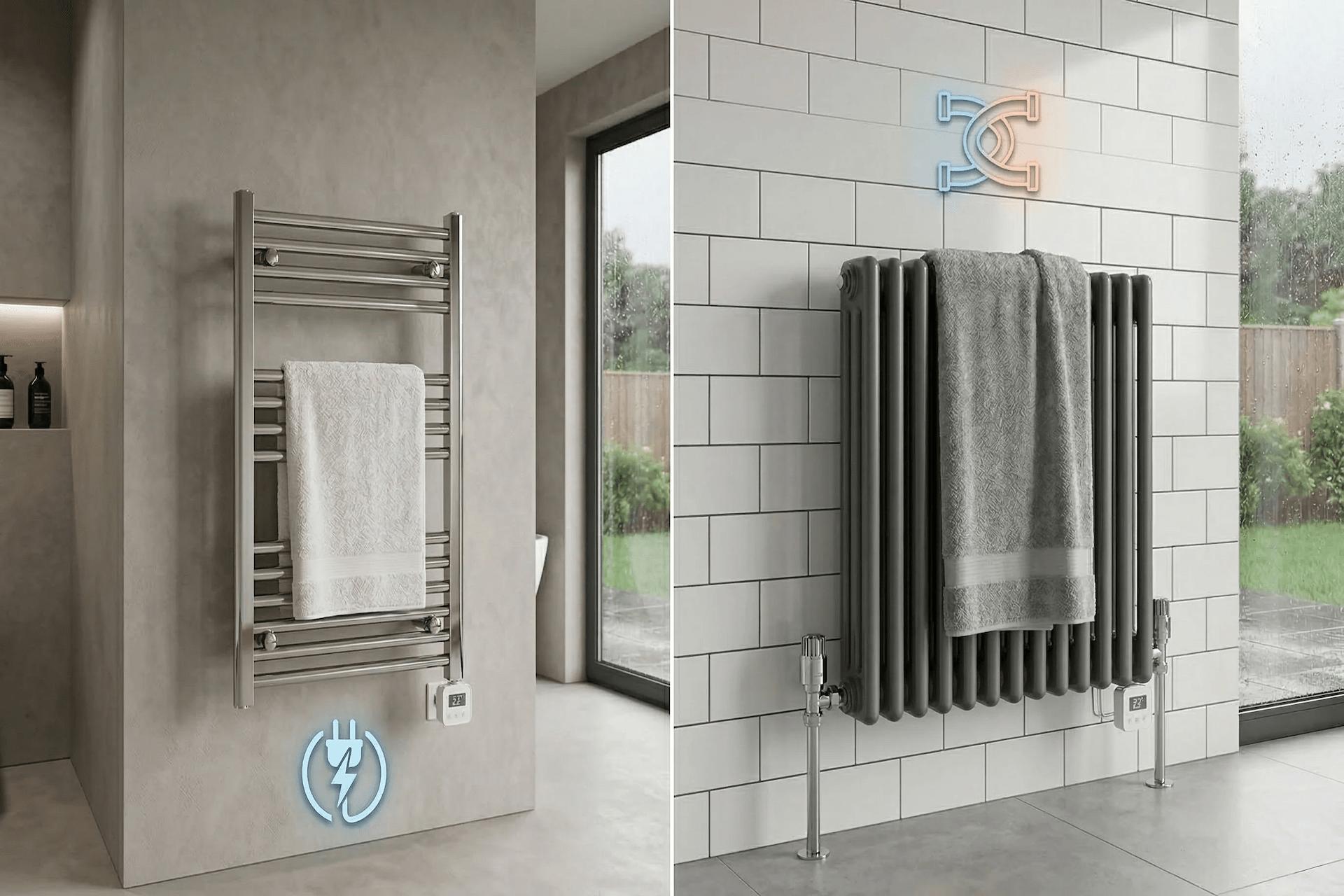
Heated towel rails, sometimes called towel warmers, are wall-mounted units specifically engineered to heat towels while contributing to overall room warmth. Available in electric, hydronic (water-fed), or dual-fuel versions, they come in various styles from minimalist straight bars to ornate traditional designs.
These units typically operate at lower temperatures than full heating systems but excel at providing targeted comfort. Electric models plug directly into a standard socket or connect via a fused spur, offering straightforward installation. Hydronic versions integrate with your central heating system for greater efficiency in larger properties.
Benefits of Heated Towel Rails
Heated towel rails shine in bathrooms where moisture control is essential. They reduce dampness on towels, preventing that musty smell and extending fabric life. Many users appreciate stepping out of the bath to a pre-warmed towel, enhancing the daily routine.
Energy-wise, they often consume less power than expected, especially timer-controlled models. Installation tends to be simpler than full radiators since many require no plumbing alterations. Their slim profile makes them perfect for tight spaces where a larger radiator would dominate.
The Role of Traditional Bathroom Heating
Standard radiators focus on raising the air temperature throughout the bathroom. They connect to the central heating circuit and provide substantial BTU output suitable for bigger rooms or those with poor insulation.
Modern designs include flat panel options and vertical styles that blend seamlessly with minimalist décor. Some incorporate towel hooks or rails as secondary features, though their primary function remains space heating.
Key Advantages of Radiators
Radiators generally heat rooms faster and more evenly, which proves valuable during the winter months in the UK. They work well alongside underfloor heating or as standalone solutions. Output can be precisely controlled through thermostatic radiator valves (TRVs), helping manage energy consumption.
Direct Comparison: Performance and Efficiency
When comparing heat output, traditional radiators usually win for larger bathrooms. A standard heated towel rail might provide 200-500 watts, while a comparable radiator could deliver 800-1500 watts or more, depending on size.
Energy efficiency varies by model and usage. Electric towel rails allow independent operation, useful when central heating remains off. Hydronic rails and radiators share the boiler’s efficiency, though poor insulation affects both.
Installation costs differ notably. Electric towel rails often prove cheaper upfront, requiring minimal disruption. Plumbing in a new radiator involves more labour and potential redecoration.
Design and Space Considerations
Aesthetic appeal plays a major role in bathroom renovations. Heated towel rails offer slim, contemporary looks that double as design features. Chrome, black, and coloured finishes allow coordination with taps and accessories.
Radiators provide bolder visual statements, particularly column or designer models. However, they typically occupy more wall space, which can limit placement options in smaller rooms.
Cost Analysis: Initial and Running Expenses
Budget-conscious homeowners often start with the purchase price. Basic towel rails start from around £50, while premium models reach several hundred pounds. Quality radiators typically cost more, especially cast-iron or designer versions.
Running costs depend heavily on usage patterns. Occasional use of an electric rail keeps expenses low. Full-time radiator operation adds more to heating bills, though modern, efficient boilers mitigate this.
Maintenance remains straightforward for both. Electric rails need little attention beyond occasional cleaning, while hydronic systems benefit from annual bleeding and inhibitor checks.
Two Key Factors to Consider
Practical Performance Points:
- Heat distribution: Radiators excel at whole-room warmth; rails focus on towels and immediate surroundings
- Drying capability: Rails dry towels faster and more hygienically
- Flexibility: Electric rails operate independently of central heating
- Heat output: Radiators generally provide higher temperatures for larger spaces
- Aesthetics: Both offer stylish options, but rails tend to appear less obtrusive
Installation and Longevity Aspects:
- Complexity: Electric rails install quickly with minimal mess
- Integration: Hydronic rails and radiators work with existing systems
- Durability: Quality models from reputable brands last 10-15 years or more
- Safety: Both meet modern electrical and plumbing standards when fitted correctly
- Future adaptability: Modular designs allow easier upgrades
Making the Right Choice for Your Bathroom
Consider your bathroom size first. Compact spaces benefit greatly from the space-saving nature of towel rails. Larger family bathrooms may need the robust heating power of a dedicated radiator.
Lifestyle matters too. Households that value luxury towel warmth often prefer rails. Those prioritising rapid room heating, especially with young children, lean towards radiators.
Many homeowners combine both systems successfully. A primary radiator provides background heat, while a supplementary towel rail adds comfort and functionality.
Climate and property type influence decisions. Well-insulated modern homes manage with lower-output solutions, whereas older period properties with high ceilings often require more powerful heating.
Expert Tips for Optimal Results
Position any heating unit away from direct water spray for safety and longevity. Use timers and smart controls to automate operations according to your routine. Professional installation ensures compliance with UK regulations, particularly for electrical work in wet zones.
Regular maintenance preserves efficiency. Wipe rails clean to maintain heat transfer, and service central heating systems annually. Consider insulation improvements alongside new heating to maximise benefits.
Final Verdict on Bathroom Comfort
After weighing the options, the best choice ultimately aligns with your specific needs and bathroom layout. Heated towel rails deliver convenient luxury and efficiency in many modern homes, while bathroom radiators provide dependable whole-room warmth that stands the test of time. Thoughtful selection creates a bathroom that feels welcoming throughout the year.